

Leave What You Find

Only after the last tree has been cut down... the last river has been
poisoned... the last fish caught, only then will you find that money cannot be
eaten. |

People are often tempted to do three things:
|
The best tool you can take with you on an outing to help minimize your impact and still have great memories of your trip is a camera. Digital cameras allow you to take hundreds of photos for free and then pick out the best at home.
 Leaving Your Mark
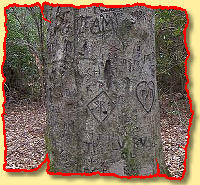
Some of the most common ways we 'leave our mark', include:
- Scratching on rocks - this lasts thousands of years and ruins ancient pictographs. It remains visible until it is eroded or overgrown with moss, or sandblasted by land managers.
- Carving in trees - this creates open wounds in trees, introducing disease which kills the tree. This mark lasts for decades, until the tree dies and decomposes.
- Writing in sand - lasts days or years, depending on water and wind erosion and visits from others.
- Arranging rocks - may last a long time, but usually just until the next visitor re-arranges them.
 Comfort
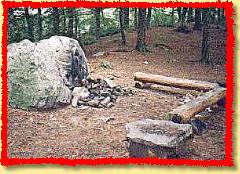
It may be tempting to build a nice, big rock firering and cut some logs to arrange seating. You might want to cut a few low-hanging limbs that are in your way or pile some rocks to make a table area. Lashing together a towel rack or cutting a seat into a stump might make camp work a bit easier. Digging a few big rocks out and placing layer of pine boughs on the ground could soften your night's sleep.
All of these will change the natural appearance of your campsite. The area will be scarred and look like it receives more traffic. These changes will not make the site more useful for future visitors - they will only make it less natural and will encourage further changes by other visitors.
 Souvenirs
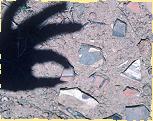
I have an arrowhead in a box, in a cabinet, in my bedroom, that I've not looked at in over 10 years. We like to 'have stuff', but nearly everything we find in the outdoors is more valuable when left where it is. This arrowhead is neat to have, but it doesn't have any real worth.
Of course, if I found a 3 pound gold nugget, it would be valuable, but that is not the sort of thing people bring home from the wilderness as reminders of their trip. More commonly, we take:
- Wildflowers
- Sticks
- Rocks
- Bones
- Fossils
- Artifacts - arrowheads, pottery, tools, ...
- Transporting wildflowers introduces their seeds to other non-natural environments where they may become weeds.
- Removing organic material, such as wildflowers sticks and bones, reduces the biomass and food supply. It also reduces ground cover that absorbs water which may lead to wind and rain erosion leading to reduced water and air quality.
- Rocks, fossils, and artifacts are often buried and result in very noticable scars when removed.
- Fossils and artifacts are scientifically important where they rest. They tell a story of past human presence and pre-historic environment. When they are moved or taken, the story disappears.
Tips on Leaving What You Find
- Take a digital camera along. Photograph instead of remove.
- Smell the flowers and bring a book along to identify them.
- Remember good campsites are found, not made - leave the area as you found it.
- Use a good sleeping pad and sitting pad for campsite comfort.
- Only disclose the location of artifact sites you find to official land managers.
- Buy a souvenir at a local tourist shop.
Leaving What You Find is Important because it:
- allows scientists to learn about the history of the area more easily
- conserves the 'wild' feel of camping, rather than creating home comforts in the outdoors
- encompasses the essence of LNT - leave no trace of our passing by leaving everything the way it was before
Leave No Trace is a concept of modifying our ethical beliefs so that we make good decisions as conscientious land stewards rather than requiring laws to prevent misuse. Unfortunately, laws governing our use of the outdoors are still needed to help define expectations.
It is illegal to remove natural objects, such as antlers, rocks and flowers, from national parks and other protected areas. The Archaeological Resources Protection Act also makes it illegal to disturb archaeological sites or take artifacts from public lands. It is each person's responisibility to understand the laws and regulations of the areas they visit.
Examples To Consider
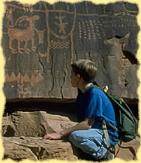 | This curious scout is closely observing ancient drawings without touching them or adding to them. It would be easy for him to scratch the cliff face with a knife or rock, but he understands the importance of protecting the old story. |
| People often create rock cairns or blaze trees to indicate the location of a trail when none is visible. These are usually unnecessary and more often than not cause confusion. I've hiked one area where I counted 8 different rock cairns showing 'the way' from one spot. At some populare places, such as this picture, visitors will slowly build monster structures as they each add a stone to mark their passing. Before entering an area, it would be good to check with the local land managers to find out what they prefer you do when you encounter trail blazes or rock cairns. Some would like them removed, others prefer they are left alone for trained volunteers to manage. | 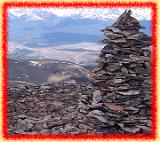 |
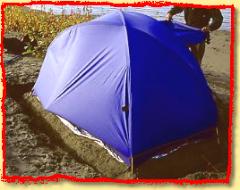 | It was once common practice to trench around your tent in case it rained. This sand trench will probably recover in a season or sooner if it is filled in by the camper, but trenches dug in soil kill the cover and may take years to recover. Since it is on a slight slope, a ground cloth is being used, and the sand naturally drains very well, any reasoning for a trench at this site is beyond me. Just pitch your tent in a good location and use a ground cloth instead of digging a trench. |
| A good campsite is found rather than made. These campers are comfortable and clean, sitting on dry grass rather than arranging rocks and logs into a circle. They've found a shady area and can relax naturally without needing extra structures built for their comfort. | 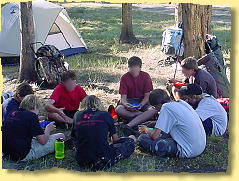 |
Debate the Principle
There may be reasons to make different choices when considering this Leave No Trace principle. Here are a few to think about:
- Why should archaeologists, paleontologists, geologists, and other -gists get to collect all the 'good stuff' that normal people have to leave in place? For collecting, there are many places designated for collecting of specimens by the public. Scientists use the specimens they collect for education and research.
- In highly trafficked areas, if someone disperses the rocks and logs from an impacted site into the forest, it may cause more harm when future visitors gather it back together again. Leaving existing structures may be the best thing to do, without further adding to them.
- Taking a stick for use as a hiking stick is less damaging to the environment than buying manufactured hiking sticks. Be sure it is legal to take the stick and plan to use it often, rather than collecing a new stick on each trip.
Teaching Leave What You Find
- General Teaching Advice - good ways to get people to learn
- Activity - Puzzling Discoveries
- Activity - Uncovering the Past
- Activity - Pilfered History
- Activity - Alien Invaders